
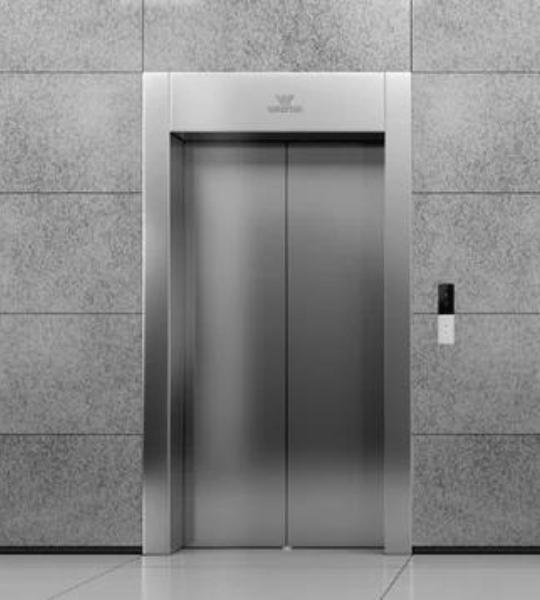
Passenger Elevator
These are the most common types of lifts used in buildings. Passenger lifts come in all sizes as per the weight and size required, ranging between 2 to 20 people.
Read the guideElevator buying guide
Automatic door passenger elevators represent the modern standard for vertical transportation in commercial and high-end residential buildings. These elevators feature power-operated doors that open and close automatically when the car arrives at a floor, providing convenience, efficiency, and enhanced traffic flow. With advanced variable frequency drive technology and microprocessor controls, they deliver jerk-free travel, precise floor leveling, and exceptional energy efficiency.
8 min read · Updated November 2026 · Justin Elevators engineering desk
Typical capacity
4–20 persons
Typical speed
0.5–2.0 m/s
Drive options
Gearless traction (VVVF)
Typical stops
2–20
Quick verdict
Apartment buildings, offices, hotels and public buildings
Choose it if
Think twice if
01
An automatic passenger lift uses a power-operated door operator on the car to open and close both the car door and the landing door together. A door coupler engages the landing door as the car arrives, so passengers never touch the doors.
Modern systems combine a gearless permanent-magnet machine, a variable-frequency drive and a microprocessor controller. That package delivers smooth acceleration, accurate floor levelling and lower energy use than older geared systems.
02
Door speed, opening width and sensor coverage have more effect on perceived performance than a small difference in rated speed. A full-height infrared light curtain should detect obstructions across the doorway; a narrow beam or a single mechanical edge is not enough for a busy lobby.
Centre-opening doors give the fastest boarding for most buildings. Telescopic or two-speed doors can fit a narrower landing opening. For hospitals and goods traffic, the clear opening must be checked against the actual bed, trolley or pallet.
03
Capacity is not just the number on the car door. It is the combination of car floor area, rated load, door width and the building's peak traffic. For apartments, a 6–8 person lift is common; for offices, traffic analysis may call for a group of larger cars.
Speed should follow the number of stops and the building height. A 2 m/s machine in a 4-storey building adds cost without improving the journey much. In taller buildings, speed and group control become important for waiting time and handling capacity.
04
Automatic lifts should include door interlocks, an overspeed governor and safety gear, buffers, overload detection, emergency alarm, emergency lighting and an automatic rescue device. The controller should log faults so service engineers can diagnose intermittent problems.
Ask for the maintenance scope in writing: how often the lift is visited, what is inspected, which consumables are included and how breakdown response is measured. A lift is a long-life asset, and the service relationship matters as much as the initial price.
Balance
Advantages
Trade-offs
Before you order
Questions
There is no single answer. It depends on the number of flats, residents, peak-hour demand and whether the lift must carry a stretcher. A traffic calculation or a site survey is the reliable way to choose capacity and speed.
MRL saves building space and can be more energy-efficient, but it is not automatically better for every building. Height, usage, service access and local code requirements all matter. We compare both options during the survey.
An ARD uses a battery-backed system to move the car to the nearest landing and open the doors during a power failure, reducing the risk of passengers being trapped.
Most buildings need a preventive maintenance visit at least monthly, with more frequent checks in high-traffic buildings. The final schedule should follow the manufacturer's instructions and the local lift rules.
Further reading
These references are for general education. Every installation must be designed for the actual building and confirmed against the applicable local lift rules and Indian Standards.
Engineering
01
Electric motor-driven mechanism mounted on the car top that opens and closes the doors. Available in AC or brushless DC configurations.
02
Power-operated panels on the elevator car. Available in center-opening or telescopic configurations.
03
Floor-level doors that open simultaneously with the car door via the door coupler mechanism.
04
Mechanical device on the car door that engages and unlocks the landing door for synchronized operation.
05
Array of infrared beams across the doorway that detect any obstruction and prevent door closure.
06
Electronic module that manages door speed, acceleration, torque, and safety monitoring.
07
Variable Voltage Variable Frequency drive for the main motor, providing smooth acceleration and energy-efficient operation.
08
Central brain managing all elevator functions, calls, positioning, doors, safety circuits, and communication.
Use cases
Commercial office buildings and corporate headquarters
Shopping malls and retail centers
Hotels and hospitality establishments
Hospitals and healthcare facilities
Airports and transportation terminals
High-rise residential apartment buildings
Educational institutions and universities
Public and government buildings
Safety
Options
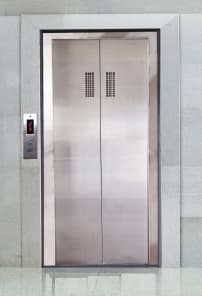
Center Opening Auto Door (Small Vision)
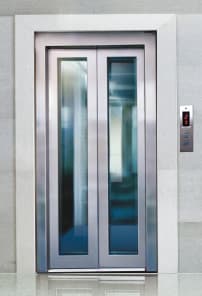
Center Opening Auto Door (Big Vision)
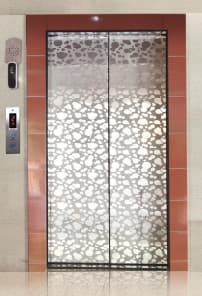
Center Opening Autodoor (Designer Finish)
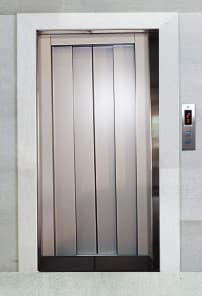
Center Opening Auto Door (Four Panel)
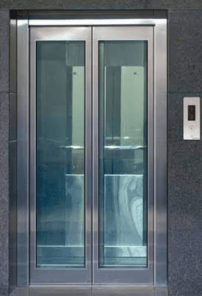
Semi Glass Doors
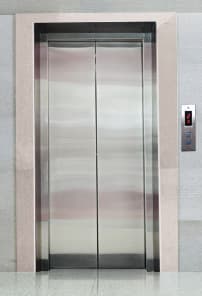
Center Opening Auto Door
Related elevators
These are the most common types of lifts used in buildings. Passenger lifts come in all sizes as per the weight and size required, ranging between 2 to 20 people.
Read the guide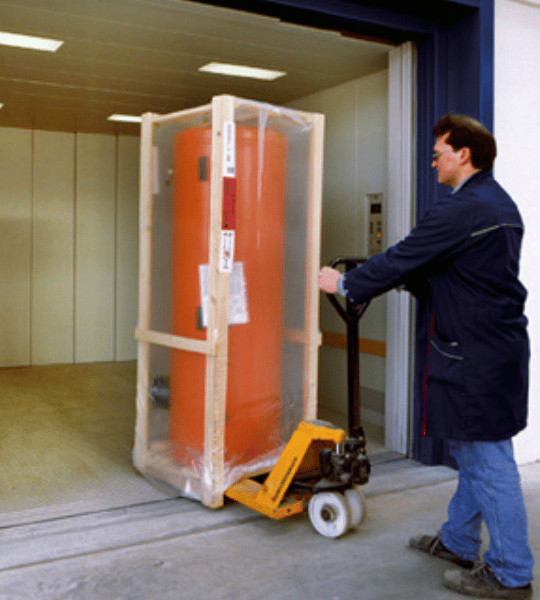
Justin elevators come with a powerful hoisting machine and ensure durability to cope with rough treatment while having a smooth ride to handle fragile loads.
Read the guide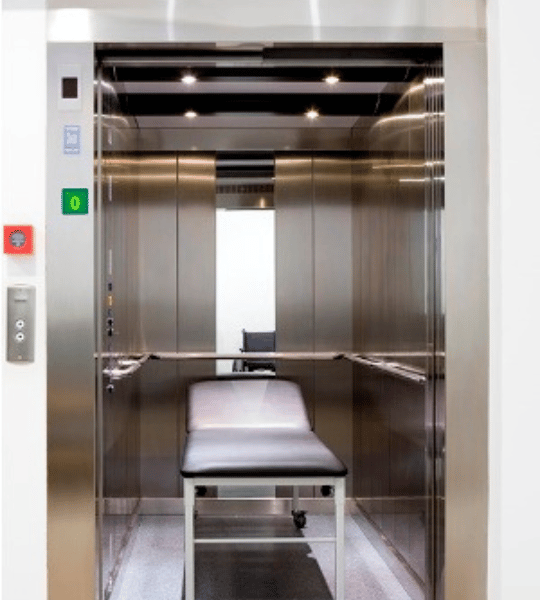
Stretcher or Bed elevators are solutions for hospitals and are renowned for quality and robust performance. A wide range of car dimensions is available.
Read the guideNext step
Send us your building details and we will advise on capacity, shaft dimensions, drive system and finishes, with no obligation.