
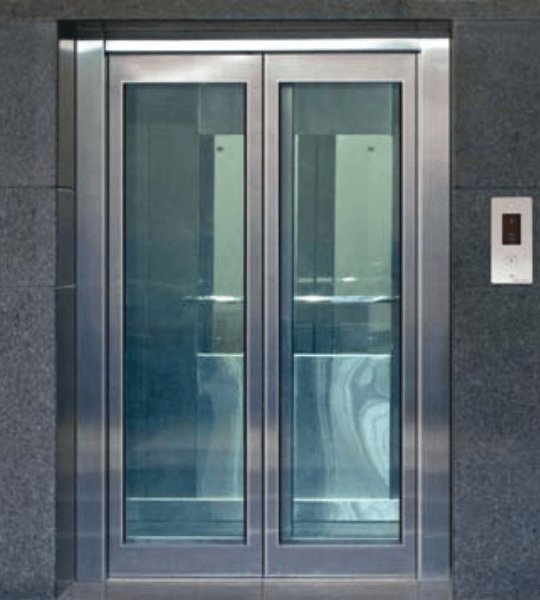
Passenger Elevator
JUSTIN ELEVATORS has been engineered with full automatic doors. Fabricated with the most advanced lift controls, appreciated for high speed, smooth travel, and perfect leveling.
Read the guideElevator buying guide
Passenger elevators with manual doors are the most widely installed type of elevator in residential and commercial buildings across India. These elevators combine reliable traction or hydraulic technology with manually operated car and landing doors, offering a cost-effective solution for buildings where automatic door operation is not essential. They are available in geared, gearless, and hydraulic configurations.
9 min read · Updated November 2026 · Justin Elevators engineering desk
Typical capacity
2–20 persons
Typical speed
0.5–1.0 m/s
Drive options
Traction or hydraulic
Typical stops
2–8
Quick verdict
Low- and mid-rise apartments, villas and small commercial buildings
Choose it if
Think twice if
01
A manual-door passenger lift carries people between floors, but the car and landing doors are opened and closed by the passenger or an attendant. The car is suspended by ropes over a traction sheave, or pushed by a hydraulic piston, depending on the drive selected.
The key difference is the door system. Fewer electrical and mechanical components usually mean a lower initial price and simpler maintenance, but the lift depends on people closing both doors properly. A door interlock prevents movement until the car and landing doors are closed and locked.
02
Manual doors are most often specified for smaller apartment buildings, villas, low-rise offices and buildings where an attendant manages the lift. They can also be a practical choice when an existing building is being upgraded and the shaft is too tight for a full automatic door package.
For a family home or a small apartment block with light traffic, the simpler door mechanism can be a sensible, cost-effective solution. The trade-off is convenience and accessibility: a passenger must operate the door, and a wheelchair user may need assistance.
03
Start with the shaft, not the cabin finish. The internal shaft size, pit depth, overhead clearance, door opening and structural loads determine which machine and car can be installed. A site survey should confirm these dimensions before the quotation is finalised.
Capacity should be based on the number of residents, peak traffic and whether stretchers, furniture or luggage must fit. A 4-person lift may be adequate for a small villa, while an apartment building may need 6–8 persons or more. Speed is usually secondary in a low-rise building; door operation and leveling accuracy matter more to the daily experience.
04
Every passenger lift should have a door interlock, overspeed governor, safety gear, terminal limits, buffers, overload detection, emergency alarm and emergency lighting. An automatic rescue device is strongly recommended for power failures.
Manual doors need periodic alignment and lubrication of the door mechanism. The service visit should also check rope condition, brake performance, guide shoes, controller faults and the safety circuit. Keep a service log and display the current inspection certificate as required by the local authority.
Balance
Advantages
Trade-offs
Before you order
Questions
They are used in low-rise residential buildings, but accessibility rules and local lift bylaws can require automatic doors in public or barrier-free buildings. Confirm the requirement with your local authority before finalising the specification.
Sometimes, but it is not just a door swap. The door operator, landing doors, controller, wiring and shaft interfaces all need to be reviewed. A site inspection will confirm whether conversion is practical.
A 4–6 person lift (roughly 272–408 kg) is common for small residential buildings. If stretcher access, furniture movement or higher traffic is expected, a larger car may be more appropriate.
Every project differs, but a compact manual-door passenger lift often needs a shaft in the region of 1.2 m × 1.2 m to 1.5 m × 1.5 m. The exact size depends on capacity, door type and drive system.
Further reading
These references are for general education. Every installation must be designed for the actual building and confirmed against the applicable local lift rules and Indian Standards.
Engineering
01
The passenger compartment with manually operated car gate or door. Available in various sizes from 2 to 20 persons capacity.
02
Hinged or sliding doors at each floor landing, operated by passengers. Available in multiple styles and materials.
03
Mechanical and electrical safety device that prevents car movement unless doors are fully closed and locked.
04
The power unit, either a geared/gearless traction machine or a hydraulic power unit depending on the configuration.
05
Microprocessor-based control system managing elevator movement, floor positioning, and safety monitoring.
06
In traction systems, steel ropes connect the car to a counterweight for balanced, efficient operation.
07
Steel rails guiding the car and counterweight for smooth vertical travel within the hoistway.
08
The control panel inside the car with floor buttons, emergency stop, alarm, and communication features.
Use cases
Low to mid-rise apartment buildings and condominiums
Villas and private residences
Small commercial office buildings
Shopping centers and retail establishments
Government and institutional buildings
Buildings where budget optimization is a priority
Applications requiring simple, reliable operation
Existing building modernization projects
Safety
Options
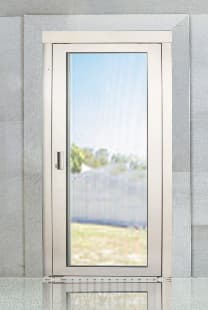
Manual Full Glass Door
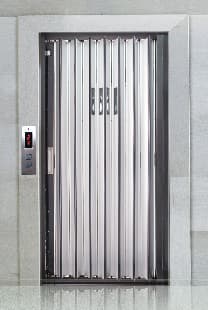
Imperforated Door
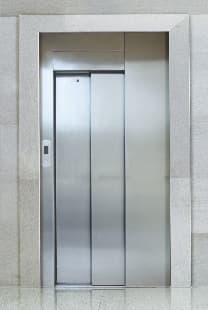
S.S. Two Fold Telescopic Door
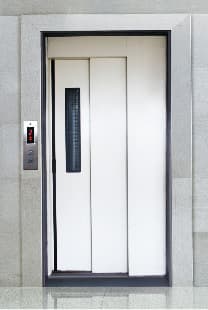
M.S. Two Fold Telescopic Door
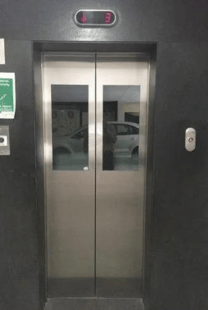
Half vision Glass Door Automatic
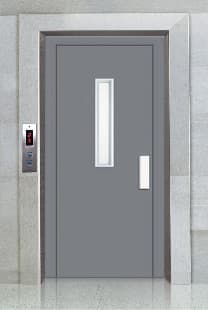
M.S. Swing Door
Related elevators
JUSTIN ELEVATORS has been engineered with full automatic doors. Fabricated with the most advanced lift controls, appreciated for high speed, smooth travel, and perfect leveling.
Read the guide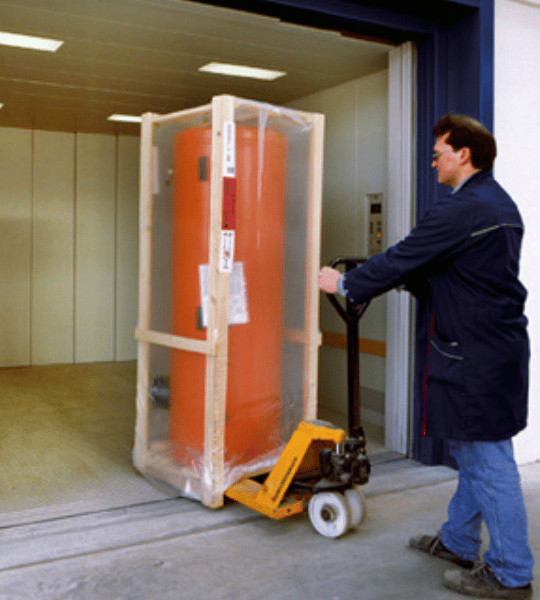
Justin elevators come with a powerful hoisting machine and ensure durability to cope with rough treatment while having a smooth ride to handle fragile loads.
Read the guide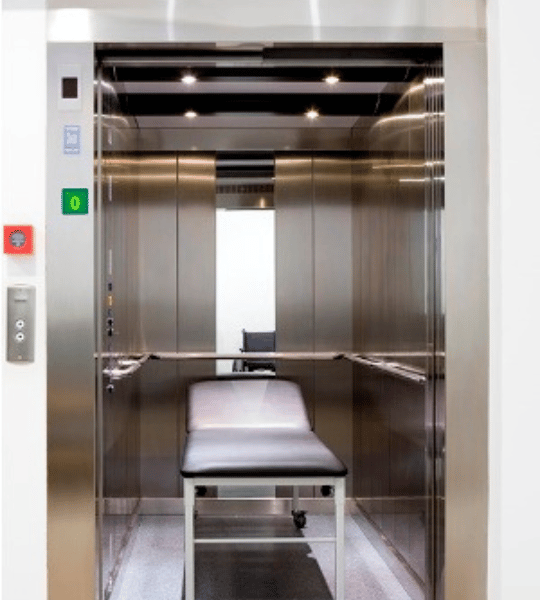
Stretcher or Bed elevators are solutions for hospitals and are renowned for quality and robust performance. A wide range of car dimensions is available.
Read the guideNext step
Send us your building details and we will advise on capacity, shaft dimensions, drive system and finishes, with no obligation.