
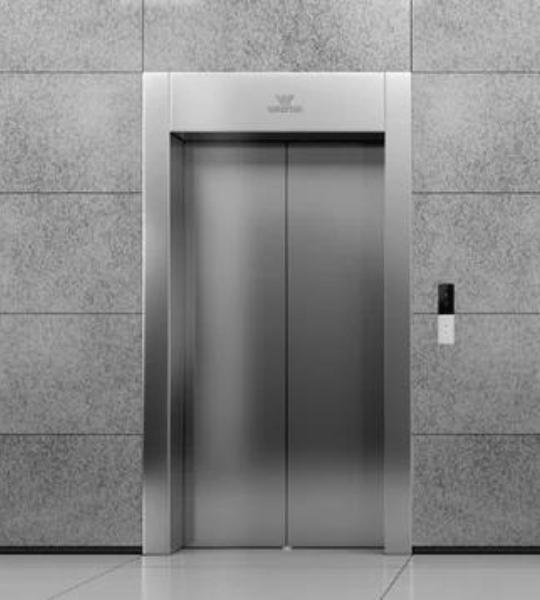
Passenger Elevator
These are the most common types of lifts used in buildings. Passenger lifts come in all sizes as per the weight and size required, ranging between 2 to 20 people.
Read the guideElevator buying guide
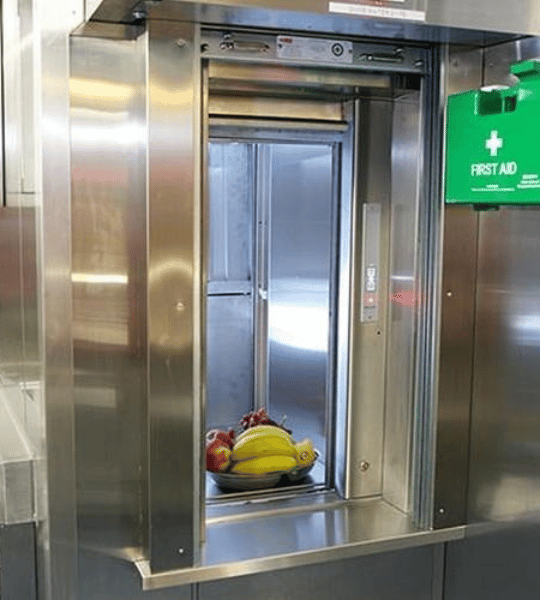
A dumbwaiter is a small freight elevator designed specifically for transporting items between floors, not people. These compact, efficient systems are invaluable in commercial establishments where frequent movement of goods between levels is required. Dumbwaiters are a practical solution for hotels, restaurants, hospitals, libraries, and other facilities where efficiency and convenience matter.
7 min read · Updated November 2026 · Justin Elevators engineering desk
Typical capacity
50–500 kg
Typical speed
0.25–0.5 m/s
Drive options
Traction or hydraulic
Typical stops
2–6
Quick verdict
Restaurants, hotels, hospitals, offices and retail stock movement
Choose it if
Think twice if
01
A dumbwaiter is a small service lift with a car sized for trays, boxes, files, linen or small equipment. It is not designed or permitted to carry people. The car is enclosed, and the landing openings have interlocked doors or hatches.
Dumbwaiters are common in restaurants, hotels, hospitals and offices because they remove repetitive carrying from stairs and keep goods traffic separate from passengers.
02
Measure the tray, cart, box or bag that will actually be carried. A restaurant may need a car that takes a stack of trays or a small trolley; a hospital may need a larger stainless steel car for linen and supplies. The door opening and the landing shelf height matter as much as the car capacity.
Typical capacities range from around 50 kg for light document lifts to 500 kg for larger commercial service lifts. Travel is usually limited to a few floors, and speed is deliberately modest.
03
For food service, specify stainless steel or powder-coated surfaces that can be wiped down, smooth joints and a floor that does not trap residue. A removable or cleanable car liner can make end-of-day cleaning faster.
For hospitals and clinics, use SS 304 or equivalent finishes, sealed surfaces and a design that supports disinfection. Confirm that the car and landing doors can be cleaned with the facility's standard chemicals.
04
Every dumbwaiter needs interlocked doors, a car that cannot move with a door open, overload protection and clear controls. The installation should prevent access to the car from the landing except through the intended hatch or door.
A dumbwaiter can sometimes use a compact shaft or a wall recess, but the structure, fire separation and electrical supply still need proper design. Do not treat it as a loose appliance; it is a fixed lifting installation.
Balance
Advantages
Trade-offs
Before you order
Questions
No. Dumbwaiters are service lifts for goods only. Their car size, doors and safety devices are not designed for passenger transport.
It depends on the trays, dishes and carts used. Measure the largest loaded item first, then add clearance. A 50–150 kg car is common for light food service, while larger operations may need more.
A dumbwaiter is a type of small service lift. The terms are sometimes used loosely, but the important point is the intended load, car size and whether passengers are permitted.
It needs scheduled inspection of doors, interlocks, ropes or hydraulic components, controls and the car. The exact interval depends on use and the manufacturer's instructions.
Further reading
These references are for general education. Every installation must be designed for the actual building and confirmed against the applicable local lift rules and Indian Standards.
Engineering
01
Small car constructed from stainless steel or durable coated steel for easy cleaning and food-safe operation.
02
Compact traction or hydraulic drive sized for the rated load. Often a drum-type machine for the smallest units.
03
Hinged or sliding doors at each landing with mechanical and electrical interlocks for safe operation.
04
Simple push-button control for up/down operation with floor selection. Available with or without call/send capability.
05
Door position sensors preventing operation unless all doors are properly closed and locked.
06
Compact rail system guiding the car within the hoistway.
07
Controls for maintenance personnel to operate the unit from the car top.
08
Call/send stations at each floor with indicator lights showing car position.
Use cases
Hotels, room service, laundry, and supply transport
Restaurants and commercial kitchens, food and dish transport
Hospitals, medicines, lab samples, and document transport
Libraries, book transport between floors
Office buildings, mail and document distribution
Retail stores, inventory movement between floors
Residential homes, convenient transport between kitchen levels
Banks, secure document and cash transport
Safety
Related elevators
These are the most common types of lifts used in buildings. Passenger lifts come in all sizes as per the weight and size required, ranging between 2 to 20 people.
Read the guide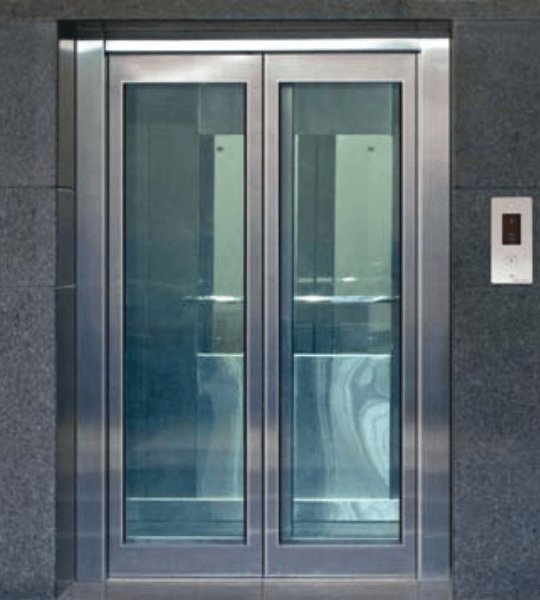
JUSTIN ELEVATORS has been engineered with full automatic doors. Fabricated with the most advanced lift controls, appreciated for high speed, smooth travel, and perfect leveling.
Read the guide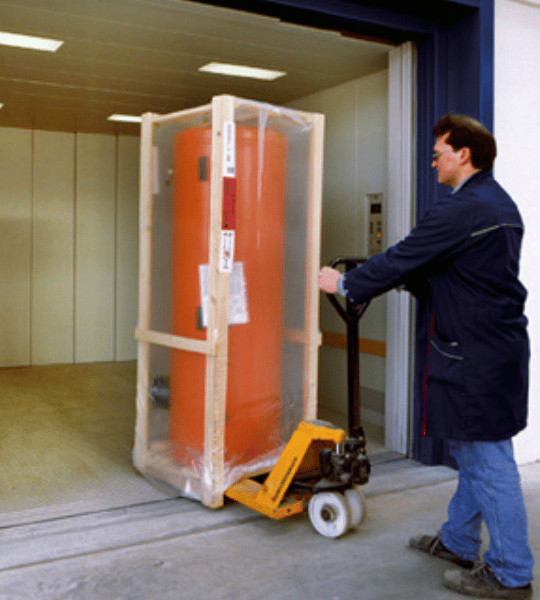
Justin elevators come with a powerful hoisting machine and ensure durability to cope with rough treatment while having a smooth ride to handle fragile loads.
Read the guideNext step
Send us your building details and we will advise on capacity, shaft dimensions, drive system and finishes, with no obligation.